Πέμπτη 2 Ιουνίου 2022

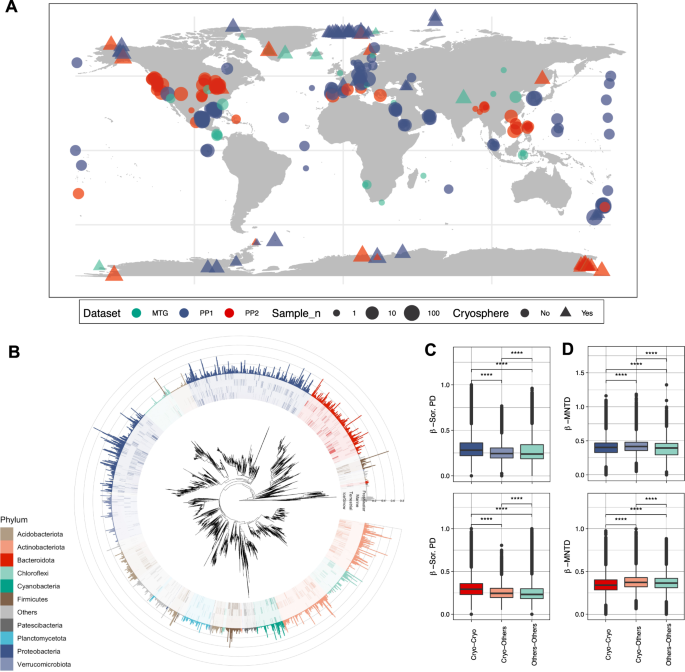
The microbiome of cryospheric ecosystems

alexandrossfakianakis shared this article with you from Inoreader

41467_2022_30816_Fig1_HTML.png

View on Web

Identification of exosomal hsa-miR-483-5p as a potential biomarker for hepatocellular carcinoma via microRNA expression profiling of tumor-derived exosomes

alexandrossfakianakis shared this article with you from Inoreader

1-s2.0-S0014482722X00116-cov150h.gif

Publication date: Available online 1 June 2022

Source: Experimental Cell Research

Author(s): Jie Lin, Wansong Lin, Yannan Bai, Yanling Liao, Qiaoyan Lin, Lingfeng Chen, Yijuan Wu

View on Web

Phase II study of alisertib as a single agent for treating recurrent or progressive atypical teratoid/rhabdoid tumor

alexandrossfakianakis shared this article with you from Inoreader
Abstract
Background
Recurrent atypical teratoid/rhabdoid tumor (AT/RT) is, most often, a fatal pediatric malignancy with limited curative options.
Methods
We conducted a phase II study of Aurora kinase A inhibitor alisertib in patients aged <22 years with recurrent AT/RT. Patients received alisertib once daily (80 mg/m 2 as enteric-coated tablets or 60 mg/m 2 as liquid formulation) on Days 1–7 of a 21-day cycle until progressive disease (PD) occurred. Alisertib plasma concentrations were measured in cycle 1 on Days 1 (single dose) and 7 (steady state) and analyzed with noncompartmental pharmacokinetics. Trial efficacy end point was ≥10 participants with stable disease (SD) or better at 12 weeks.
Results
SD (n=8) and partial response (PR) (n=1) were observed among 30 evaluable patients. Progression-free survival (PFS) was 30.0% ± 7.9% at 6 months and 13.3% ± 5.6% at 1 year. One-year overa ll survival (OS) was 36.7% ± 8.4%. Two patients continued treatment for >12 months. PFS did not differ by AT/RT molecular groups. Neutropenia was the most common adverse effect (n=23/30, 77%). The 22 patients who received liquid formulation had a higher mean maximum concentration (Cmax) of 10.1 ± 3.0 µM and faster time to Cmax (Tmax = 1.2 ± 0.7 h) than those who received tablets (Cmax = 5.7 ± 2.4 µM, Tmax = 3.4 ± 1.4 h).
Conclusions
Although the study did not meet pre-determined efficacy end point, single agent alisertib was well tolerated by children with recurrent AT/RT, and SD or PR was observed in approximately a third of the patients.

View on Web

Overexpression of TIGAR and HO-1 in peripheral blood mononuclear cells (PBMCs) of breast cancer patients treated with radiotherapy

alexandrossfakianakis shared this article with you from Inoreader
.
View on Web

Dedicated isotropic 3-D T1 SPACE sequence imaging for radiosurgery planning improves brain metastases detection and reduces the risk of intracranial relapse

alexandrossfakianakis shared this article with you from Inoreader

S01678140.gif

Publication date: Available online 2 June 2022

Source: Radiotherapy and Oncology

Author(s): Tugce Kutuk, Kevin J. Abrams, Martin C. Tom, Muni Rubens, Haley Appel, Charif Sidani, Matthew D. Hall, Ranjini Tolakanahalli, D. Jay J. Wieczorek, Alonso N. Gutierrez, Michael W. McDermott, Manmeet S. Ahluwalia, Minesh P. Mehta, Rupesh Kotecha

View on Web

Effectiveness of Paxlovid in Reducing Severe COVID-19 and Mortality in High Risk Patients

alexandrossfakianakis shared this article with you from Inoreader
Abstract
Background
Paxlovid was granted emergency use authorization for the treatment of mild to moderate COVID-19, based on the interim analysis of EPIC-HR trial. Paxlovid effectiveness needs to be assessed in a noncontrolled setting. In this study we used population-based real world data to evaluate the effectiveness of Paxlovid.
Methods
The database of the largest healthcare provider in Israel was used to identify all adults aged 18 years or older with first ever positive test for SARS-CoV-2 between January and February 2022, who were at high risk for severe COVID-19 and had no contraindications for Paxlovid use. Patients were included irrespective of their COVID-19 vaccination status. Cox hazard regression was used to estimate the 28 day HR for severe COVID-19 or mortality with Paxlovid examined as time-dependent variable.
Results
Overall, 180,351 eligible were included, of them only 4,737 (2.6%) were treated with Paxlovid , and 135,482 (75.1%) had adequate COVID-19 vaccination status. Both Paxlovid and adequate COVID-19 vaccination status were associated with significant decrease in the rate of severe COVID-19 or mortality with adjusted HR 0.54 (95% CI, 0.39-0.75) and 0.20 (95% CI, 0.17-0.22), respectively. Paxlovid appears to be more effective in older patients, immunosuppressed patients, and patients with underlying neurological or cardiovascular disease (interaction p-value <0.05 for all). No significant interaction was detected between Paxlovid treatment and COVID-19 vaccination status.
Conclusions
This study suggests that in the era of omicron and in real life setting Paxlovid is highly effective in reducing the risk of severe COVID-19 or mortality.
View on Web

Τετάρτη 1 Ιουνίου 2022

Nonsuicidal self‐injury and rumination: A meta‐analysis

alexandrossfakianakis shared this article with you from Inoreader

Abstract

Trait rumination is the tendency to overthink and focus on negative emotions and events and is related to a number of psychological disorders and maladaptive behaviors including nonsuicidal self-injury (NSSI). The purpose of this study was to conduct a meta-analysis of the relationship between trait rumination and NSSI behaviors. Results from 60 samples showed small effect sizes between trait rumination and NSSI engagement, NSSI frequency, and the number of methods used to self-injure in cross-sectional samples. Results from 13 samples showed small effect sizes between trait rumination and NSSI engagement and NSSI frequency in longitudinal samples. Moderator analyses indicated that this relationship is similar whether the type of rumination is depressive or not and is generally consistent across different ages, genders, and ethnicities. These results help clarify the role of trait rumination as a risk factor for NSSI.

View on Web

DNA methylation profiling of central nervous system hemangioblastomas identifies two distinct subgroups

alexandrossfakianakis shared this article with you from Inoreader

Abstract

Hemangioblastomas (HBs) of the central nervous system are highly vascular neoplasms that occur sporadically or as a manifestation of von Hippel–Lindau (VHL) disease. Despite their benign nature, HBs are clinically heterogeneous and can be associated with significant morbidity due to mass effects of peritumoral cysts or tumor progression. Underlying molecular factors involved in HB tumor biology remain elusive. We investigated genome-wide DNA methylation profiles and clinical and histopathological features in a series of 47 HBs from 42 patients, including 28 individuals with VHL disease. Thirty tumors occurred in the cerebellum, 8 in the brainstem and 8 HBs were of spinal location, while 1 HB was located in the cerebrum. Histologically, 12 HBs (26%) belonged to the cellular subtype and exclusively occurred in the cerebellum, whereas 35 HBs were reticular (74%). Unsupervised clustering and dimensionality reduction of DNA methylation profiles revealed two distinct subgroups. Methyl ation cluster 1 comprised 30 HBs of mainly cerebellar location (29/30, 97%), whereas methylation cluster 2 contained 17 HBs predominantly located in non-cerebellar compartments (16/17, 94%). The sum of chromosomal regions being affected by copy-number alterations was significantly higher in methylation cluster 1 compared to cluster 2 (mean 262 vs. 109 Mb, p = 0.001). Of note, loss of chromosome 6 occurred in 9/30 tumors (30%) of methylation cluster 1 and was not observed in cluster 2 tumors (p = 0.01). No relevant methylation differences between sporadic and VHL-related HBs or cystic and non-cystic HBs could be detected. Deconvolution of the bulk DNA methylation profiles revealed four methylation components that were associated with the two methylation clusters suggesting cluster-specific cell-type compositions. In conclusion, methylation profiling of HBs reveals 2 distinct subgroups that mainly associate with anatomical location, cytogenetic profiles and differ ences in cell type composition, potentially reflecting different cells of origin.

View on Web

A novel extracorporeal cardiopulmonary resuscitation strategy using a hybrid emergency room for patients with pulseless electrical activity

alexandrossfakianakis shared this article with you from Inoreader

13049.jpg

Whether extracorporeal cardiopulmonary resuscitation (ECPR) is indicated for patients with pulseless electrical activity (PEA) remains unclear. Pulmonary embolism with PEA is a good candidate for ECPR; however...
View on Web

Effect and Mechanism of the Lenvatinib@H-MnO2-FA Drug Delivery System in Targeting Intrahepatic Cholangiocarcinoma

alexandrossfakianakis shared this article with you from Inoreader
View on Web

Mechanistic and biologically based models in epidemiology; a powerful underutilized tool

alexandrossfakianakis shared this article with you from Inoreader
Abstract
Mechanistic and biologically based mathematical models of chronic and behavioral disease processes aim to capture the main mechanistic or biological features of the disease development, and to connect these with epidemiological outcomes. These approaches have a long history in epidemiological research and are complementary to traditional epidemiological or statistical approaches to investigate the role of risk factor exposures on disease risk.In the article by Simonetto et al. (Am J Epidemiol. XXXX;XXX(XX):XXXX–XXXX)), the authors present a mechanistic, process-oriented, model to investigate the role of smoking, hypertension and dyslipidemia on the development of atherosclerotic lesions and their progression to myocardial infarction (MI). Their approach builds on and brings to cardiovascular disease the ideas and perspectives of earlier mechanistic and biologically based models for the epidemiology of cancer and other chronic diseases, providin g important insights into the mechanisms and epidemiology of smoking related MI.We argue that although mechanistic modeling approaches have demonstrated their value and place in epidemiology, they are highly underutilized. We call for efforts to grow mechanistic and biologically based modeling research, expertise and awareness in epidemiology, including the development of training and collaboration opportunities to attract more students and researchers from STEM areas into the epidemiology field.
View on Web